What I Would Do If I Were Selling Land in Florida in 2026 (A Real-World Game Plan)
What I Would Do If I Were Selling Land in Florida in 2026: If you’re thinking about selling land in Florida in 2026, you’re not alone. I’m seeing more landowners ask the same questions:
- “Is this a good time to sell?”
- “Are buyers still buying?”
- “Should I list it… or take a direct offer?”
- “What about interest rates and the market?”
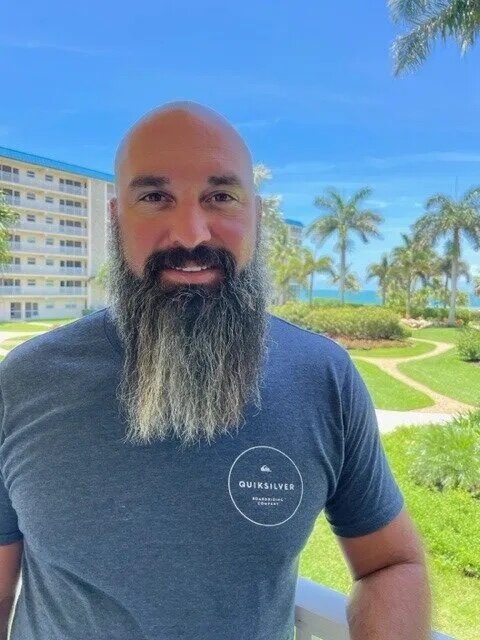
Hello. My name is Steve Daria, a Florida licensed real estate broker (BK3030453), and I’ve been involved in Florida real estate since 2002, with hands-on experience in brokerage leadership, title operations, and land investing since 2004.
This page is exactly what the title says: what I would do if I were in your shoes—in 2026—so you can make a smart decision without wasting months (or years) guessing.
So come along for the ride and I will give you my opinion on the Florida vacant land market, some predictions and insights so you can make an informed decision if 2026 is the right time to sell your land.
First: What’s Happening in the Market Right Now (and Why 2026 Feels Different)
1) Interest rates are still the main “road block”
Even though land doesn’t always finance like a house, broader borrowing costs affect buyer behavior.
- Freddie Mac’s weekly survey showed the average 30-year fixed mortgage rate at 6.06% as of January 15, 2026 (down from 7.04% a year earlier). Definetly a good trend as high interest rates have really stalled the real estate market here in Florida.
- For land loans specifically, rates can vary widely depending on the property type, down payment, and credit profile—many lender guides commonly cite a broad range (roughly 4%–10%).
- For agricultural-style financing benchmarks, the USDA Farm Service Agency listed Farm Ownership – Direct at 5.625% effective January 1, 2026.
Options For Lowering Morgtgage Rates: President Trump has gotten creative to stimulate the housing market and announced that Fannie Mae and Freddie Mac would buy $200 billion of mortgage bonds. Mid January 2026 as I write this, rates have fallen to their lowest level in more than three years this week since the announcement.
It shows that if certain entities (like Fannie Mae) are fiscally responsible and have cash on the sidelines, the Administration will not have to rely on the Fed for quantitative easing and/or cutting the Fed rate.
My takeaway for 2026 on Interest Rates: As rates reduce, buyers will come back into the market. More sellers on the sidelines (and unsuccessful sellers “delisted”) will list their properties. However, with inventory still relatively tight for both land and homes, this likely will encourage home builders (small and large) to capitalize on lower rates and they will end up buying vacant land and developing to meet demand.
Today’s Land Buyers May Change Tomorrow: Buyers are more payment-sensitive than they were in the ultra-low rate era. Clean, buildable, easy-to-understand parcels often move faster. Complicated parcels can still sell—but pricing, marketing, and the “right buyer” matter more. Land sellers may want to potentially use seller financing with competitive rates/terms to stand out from the competition and have a chance at selling faster on the open market. However, as rates decrease, land buyers may be on the hunt regardless.
2) Land activity has stayed surprisingly resilient in SE Florida regions
A strong example: Miami Association of Realtors reported that tri-county land sales volume (Miami-Dade, Broward, Palm Beach) reached $3.56B in the first half of 2025, up 15% year-over-year, with 2,440 parcels sold (up 9%).
They also noted median price-per-square-foot increases across land types in that period (e.g., residential land median $/SF up 16%).
And statewide land-focused firms were still describing Florida land as “active” across property types in 2025 (timberland, farms, transitional land, etc.).
My takeaway: Florida land demand hasn’t disappeared—it’s become more selective. In 2026, the land that sells well is typically land that’s either:
- priced correctly for today’s money,
- positioned clearly for a specific use (build, hold, invest, recreate, etc.) and / or
- has the right location and / or improvements
One thing we know, they are not making any more land.
3) The broader Florida real estate outlook has shifted toward “more balanced”
Florida’s housing market commentary going into 2026 has emphasized improving conditions tied to rate direction, supply, and underlying demand—while acknowledging affordability challenges.
At the same time, some forecasts have projected modest Florida price softness in 2026 compared with national expectations.
My Takeaway: A “balanced” market tends to reward sellers who are prepared and realistic—especially land sellers, because land values are driven by fewer comparables and buyer pools can be narrower.
What About Migration: This is a silent factor with future Florida land sales… Just like we saw with the pandemic….
Politicians like Ron DeSantis is calling for removal of property taxes on homesteaded property. Nov 2026 we might have the chance to vote on this. And if passed, this could provide a huge influx of people to the Sunshine state causing all properties values to increase.
And of course we have the other side of political pendulum, like upcoming NY Mayor, Zohran Mamdani or Gavin Newsom, California’s governor. Based on their governing tactics, government officials like these guys will only push people out of certain cities and states to more tax friendly states like Florida. Think about Florida having NO state income tax and if we can add NO property tax on homesteads? What do you think will happen? Hey, I moved here from New Jersey, so that was an easy decision for me back when I was 18. But I think this would pull people from the sidelines and trade in snow blowers for beach chairs.
📊 People Moving to Florida by Year (Domestic In-Migrants)
| Time period | In-Migrants to Florida (approx) | Notes |
|---|---|---|
| 2019 (pre-pandemic) | ~601,600 | Baseline for comparison; not pandemic period. |
| 2020 (pandemic onset) | Not officially reported | The Census does not list exact state-to-state for 2020 in that table, but other estimates suggest ~252,000 moved between July 2019–July 2020. |
| 2021 | 674,740 | Strong jump as pandemic relocations accelerated. |
| 2022 | 738,969 | Highest recorded in-migration during the pandemic period. |
| 2023 | 636,933 | Still elevated but below 2022’s peak. |
Second: What I Would Do If I Were Selling Land, I Would Think About My Land In A Strategic Manner
Step 1: I Would Get Crystal Clear on “What Kind of Land Am I Really Selling?”
Before you decide how to sell, I’d identify what category the property falls into, because each type has a different buyer pool and pricing behavior. Some parcels of land can fall into multiple categories.
- Buildable residential lot (utilities, access, zoning alignment)
- Rural/recreational acreage
- Agricultural / grove / farm-style land
- Transitional land (growth path / future development potential)
- Problem land (no access, wetlands, floodway, title issues, etc.)
If you want a quick way to classify it, start here:
- Types of Land We Buy in Florida (helps you identify your category)
- Florida Land Glossary (definitions like easements, setbacks, wetlands, etc.)
Step 2: I Would Run a “Reality Check” on the 5 Things That Control Land Value in 2026
Here’s what I’d look at first, because these factors tend to determine whether land sells in weeks—or sits for months.
1) Access + legal ingress/egress
If there’s no clear legal access, the buyer pool shrinks. Period. Most of these properties are all about selling at a deep discount assuming one could potential gain access and / or create an easement.
2) Zoning + future use
“Can I do what I want with it?” is the buyer’s first question in 2026. This will include but not limited to structure type, set backs, deed restrictions and any issues associated with the property like wetlands.
3) Utilities (or a clear plan)
Utilities can move pricing dramatically, but even “no utilities” can sell if it’s priced and marketed properly. Develop pricing strategies for a buyer. Get bids to bring in utilities regardless if city of renewable.
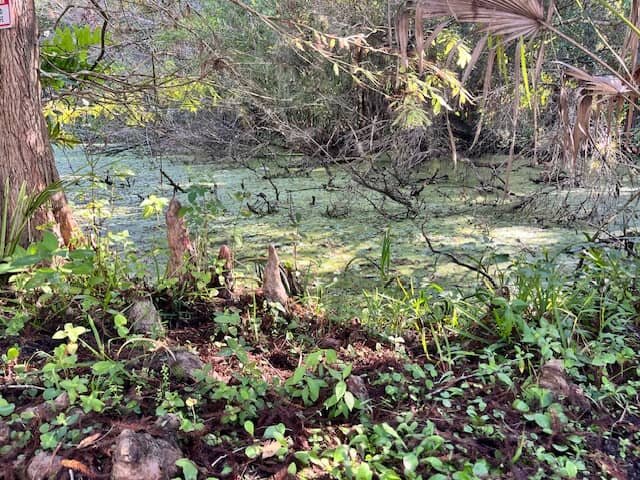
4) Flood zones / wetlands / environmental constraints
This doesn’t mean it can’t sell. It means your buyer needs to understand it—clearly—up front. Do your own due diligence.
Sometimes more professional documentation the better, like a wetlands determination or soil testing. Invest in this to help prevent prospective buyers from walking.
Let’s face it. Many people are lazy and price sensitive. Many some don’t want to do the research. Or pay the upfront costs with no guarantee of them closing on the property.
5) Title quality
Land is a common target for fraud, and Florida Realtors has highlighted vacant land as a top target for deed/title scams (“title pirates”).
So if I owned land in 2026, I’d use the appropriate professionals like a real estate attorney or licensed title company to transact with title insurance.
Side Note for Land Owners & Fraud: This is a bit scary to say, but we deal with fraud at least once a week. This is how it goes. Someone inquires through our website and claim to be the seller. We go through the time consuming process of due diligence, compose the paperwork and only to find out they are not the owner. We have great title professionals we work with to catch these rats.
That said, protect your asset. If it doesn’t have debt against it, it’s vulnerable.
Step 3: I Would Choose a Selling Path Based on My Goal (Not My Emotion)
In 2026, I’d pick a strategy based on what I actually care about:
If my priority is top dollar and I can wait:
- List it the traditional way (with strong land marketing + patience). If selling FSBO or with a REALTOR ensure you have:
- Great photos and / or videos
- Adequate info about the land, area, development
- Supporting documents (Survey, Reports, Etc)
If my priority is certainty and I want a clean exit:
- Consider a direct sale to a real buyer (not someone “tying it up”)
If my priority is monthly income and I don’t need cash today:
- Owner financing can be an option (but it needs proper paperwork and buyer vetting)
If you want the full breakdown of how the process works end-to-end:
Step 4: What I Think Will Matter Most for Florida Land Sellers in 2026 (Soft Predictions)
I’m not going to pretend anyone can “guarantee” the market. But based on what rates are doing, how buyers behave when money is more expensive, and what we’ve seen in Florida land activity, here are reasonable 2026 expectations:
Prediction #1: “Clean” parcels will keep attracting buyers first
Buildable lots with clear use cases tend to win in payment-sensitive environments.
Prediction #2: Pricing discipline will matter more than ever
In 2026, buyers compare more, negotiate more, and walk away more quickly if the numbers don’t work.
Prediction #3: Problem land still sells—if marketed honestly
Wetlands, access issues, flood zones, probate, and title problems don’t automatically kill a deal. But they do require:
- the right buyer pool,
- clear explanations,
- and realistic pricing.
Prediction #4: Seller motivation will keep increasing
Even when markets “normalize,” landowners still face:
- property taxes,
- HOA fees (where applicable),
- maintenance headaches,
- inherited land complexities,
- and simple “I’m done with it” fatigue.
(And yes—on our end—we’ve also seen more inquiries from owners wanting to sell as holding costs and uncertainty push people to simplify. That’s not a statistic I can prove across the whole market—it’s just what we’re experiencing in real conversations.)
Third: The “If It Were Mine Land” What I Would Do If I Were Selling Land Checklist (Simple, Practical, 2026 Version)
If I owned land and wanted to sell in 2026, I would do this in order:
- Confirm ownership + get the APN / parcel ID and any other supporting documentation.
- Identify land type + constraints (access, zoning, wetlands/flood, utilities)
- Decide my priority (max price vs speed vs simplicity)
- Compare my options side-by-side (list vs direct vs owner finance)
- Protect myself from scams (title clarity + reputable closing process)
- Choose a path and commit (most delays come from half-decisions)
One Additional Thing: You can improve land. Let’s take an example of a lot we sold in Lehigh Acres in Lee County Florida.
About the Author (Why I’m Writing This)
I’m Steve Daria, a Florida licensed real estate broker here in SW Florida. I began my real estate career in 2002, earned my broker’s license in 2006, helped scale a brokerage to 60+ agents, and launched a full-service title company in 2011—which gave me deep exposure to the real issues that derail closings (title defects, probate issues, liens, deed handling, and Florida closing procedures).
Along with Joleigh Prevel (Florida REALTOR), we’ve been buying, selling, and investing in Florida real estate since 2004, and we built Cash For Land Florida to help landowners get clarity and options—especially when land is complicated.
If you want the full background on Steve & Joleigh, you can read it here:
If You Want a No-Pressure Opinion on Your Land
If you’re still unsure what the “right move” is in 2026, that’s normal—land isn’t as straightforward as selling a house.
If you’d like, we can look at your parcel and tell you:
- what category it falls into,
- what typically affects value for that type of land,
- and what your realistic options are (not just one pitch).
If it’s a fit, we’ll make an offer. If it’s not, we’ll still point you to the best next step.
- Contact Us
- Or explore the Florida Land Resource Center
- See real examples in Real Case Studies
Get Started: Get Your Cash Offer Below…
We are direct land buyers. There are no commissions or fees and no obligation whatsoever. Start below by sharing where your property is and where we can send your offer…
Disclaimer: This page is educational and not legal, tax, or financial advice. For guidance on your situation, consult the appropriate licensed professional.