Selling Land With Setback Restrictions in Florida: What Property Owners Need to Know
Selling land with setback restrictions in Florida can be frustrating, especially when buyers discover that required distances from property lines, roads, wetlands, or waterways significantly reduce usable space. While setbacks don’t automatically make land unsellable, they often limit where and how a property can be developed, which directly affects value and buyer demand.
This guide explains how setback restrictions work in Florida, why they matter to buyers, and what landowners should know before selling.
What Are Setback Restrictions?
Setbacks are minimum distance requirements that determine how close structures can be built to property lines, roads, water bodies, and other protected areas. These rules are established by local zoning codes and can vary widely by county, municipality, and zoning classification.
Common setback types include:
- Front, side, and rear property line setbacks
- Road and right-of-way setbacks
- Wetland, canal, and waterway buffers
- Conservation or environmental buffers
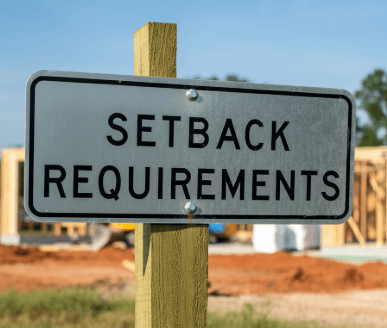
How Setbacks Affect Buildability and Value
Setback restrictions can significantly shrink the usable portion of a parcel, especially on smaller lots or irregularly shaped properties. In some cases, setbacks overlap, leaving little or no viable building envelope.
This often leads to:
- Reduced buildable square footage
- Increased design or engineering costs
- Buyer concerns about feasibility
- Lower market value compared to unrestricted lots
Why Setbacks Commonly Cause Deals to Fall Apart
Many buyers only discover setback limitations during due diligence, after surveys or zoning reviews are completed. When expectations don’t align with reality, contracts are frequently renegotiated or canceled.
Clear upfront disclosure helps prevent:
- Failed inspections
- Last-minute price reductions
- Extended closing timelines
Selling Land With Setbacks in Florida
Land with setback restrictions can still sell, especially when priced appropriately and marketed to buyers who understand development limitations. Some buyers may use the property for alternative purposes, while others factor setbacks into design plans from the start. The key is positioning the land accurately and setting realistic expectations.
When selling land with setback restrictions in Florida, it’s important to understand that setback requirements can vary widely by county and overlay district, and in some cases can significantly limit how a property can be used or built on. Certain counties are known for particularly strict or unusually large setback rules in specific contexts. For example, Franklin County requires setbacks of up to 50 feet from wetlands or water bodies for new construction in some zoning districts. Walton County imposes especially large setbacks—up to 400 feet from the highway right-of-way—within its U.S. 98 and U.S. 331 Scenic Corridor Overlay Districts. Lee County enforces detailed and often extensive setbacks from canals, rivers, and other bodies of water, with requirements that vary by zoning and location. Similarly, Seminole County applies more restrictive setbacks to properties located within certain overlay areas, such as the Lake Mary Corridor or the Econlockhatchee River Basin, beyond what standard zoning alone would require.
Related Resource
Selling Land With Issues in Florida
This page is part of our broader resource on selling land with issues in Florida, which covers wetlands, zoning restrictions, protected wildlife, flood zones, failed perc tests, lack of access, density issues and other factors that can affect land value and development. If your property has more than one issue, our main guide can help you better understand your options.
👇 Tell us about your property below
No obligation. No spam. Fast response.